
My 5 Years Experience Living In Germany
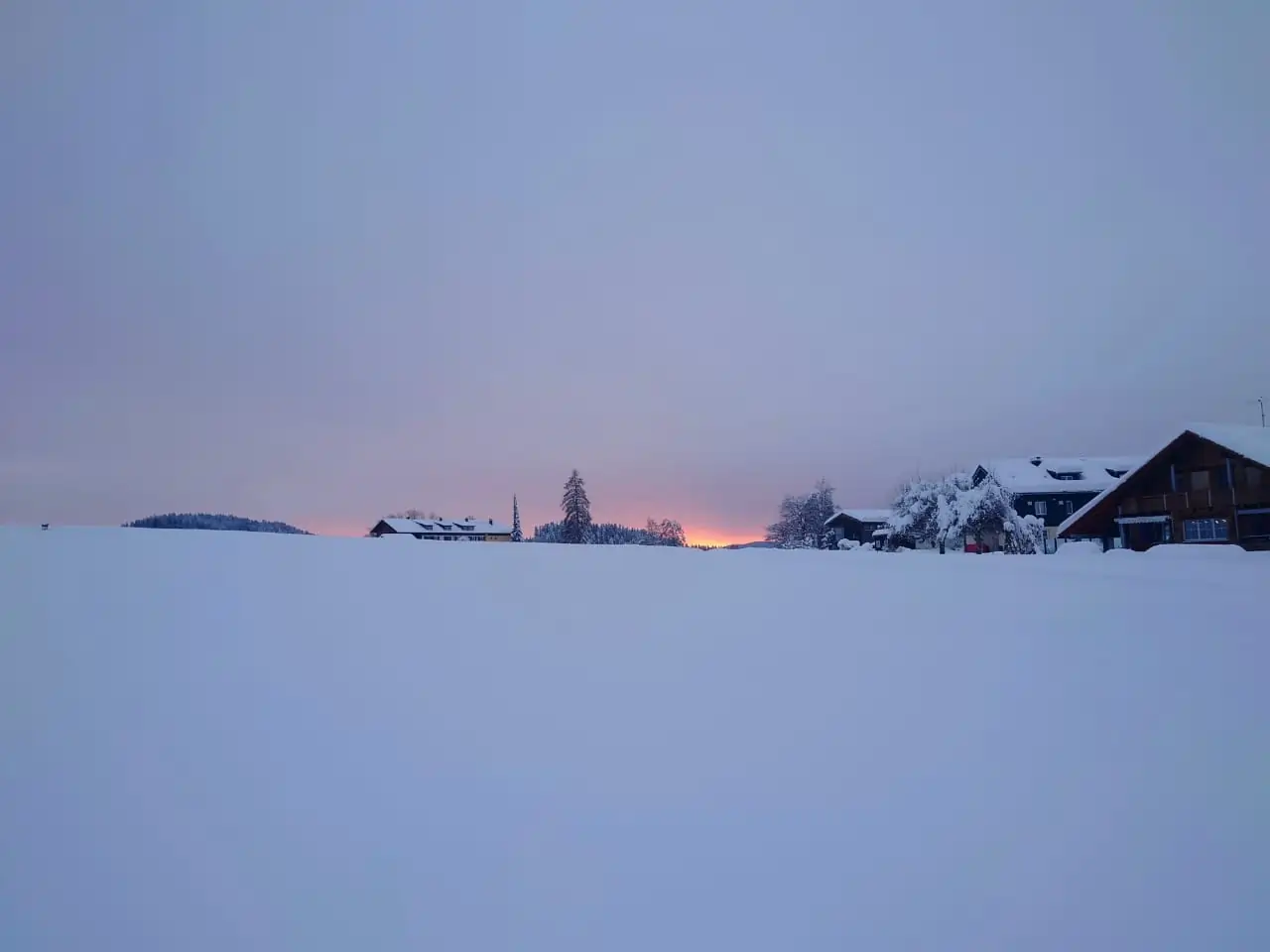
On the 19th of December 2020, at the peak of the Covid-19 pandemic, aboard an almost empty Emirates Boeing 777, I left the familiarity and warmth of Nairobi skies and landed thirteen hours later in a deserted, ice-cold Munich. It was a radical shift that quietly dismantled everything I had grown up knowing and forced me to rebuild my life from scratch. Five years on, this is what that uprooting has changed, broken, and ultimately reshaped.
My plan was never to leave Kenya.
The Illusion Of Certainty
If life had followed the script I knew, I would have completed my engineering studies, sought for employment in Nairobi, and if nothing came through, helped my father keep an eye on his business while waiting for an opportunity to open up.
Marriage would have followed eventually. Married to a Kisii Seventh-day Adventist woman, most likely nudged along by my parents’ increasingly direct reminders about grandchildren, and with it a quiet life on the outskirts of Kisii town if circumstances allowed.
It was a familiar path. One I had seen lived out by those before me. Education, work, marriage, children, responsibility. Not glamorous, but stable. Predictable. Understood. As someone not very fond of change, it was the kind of routine I imagined I would have thrived in. I didn’t know life any other way.
That belief held even after I met my wife Vreni in Kenya. Though born and raised in Germany, her plans were to stay and build a life there after several years working in the Maasai Mara. It felt like confirmation that the future I imagined didn’t need to change.
We talked about the future often and agreed on a plan. After my studies in Nairobi, we would move back to the Maasai Mara. She would start her own tourist agency, and I would try to establish myself as an electrical engineer. It felt sensible for both of us.
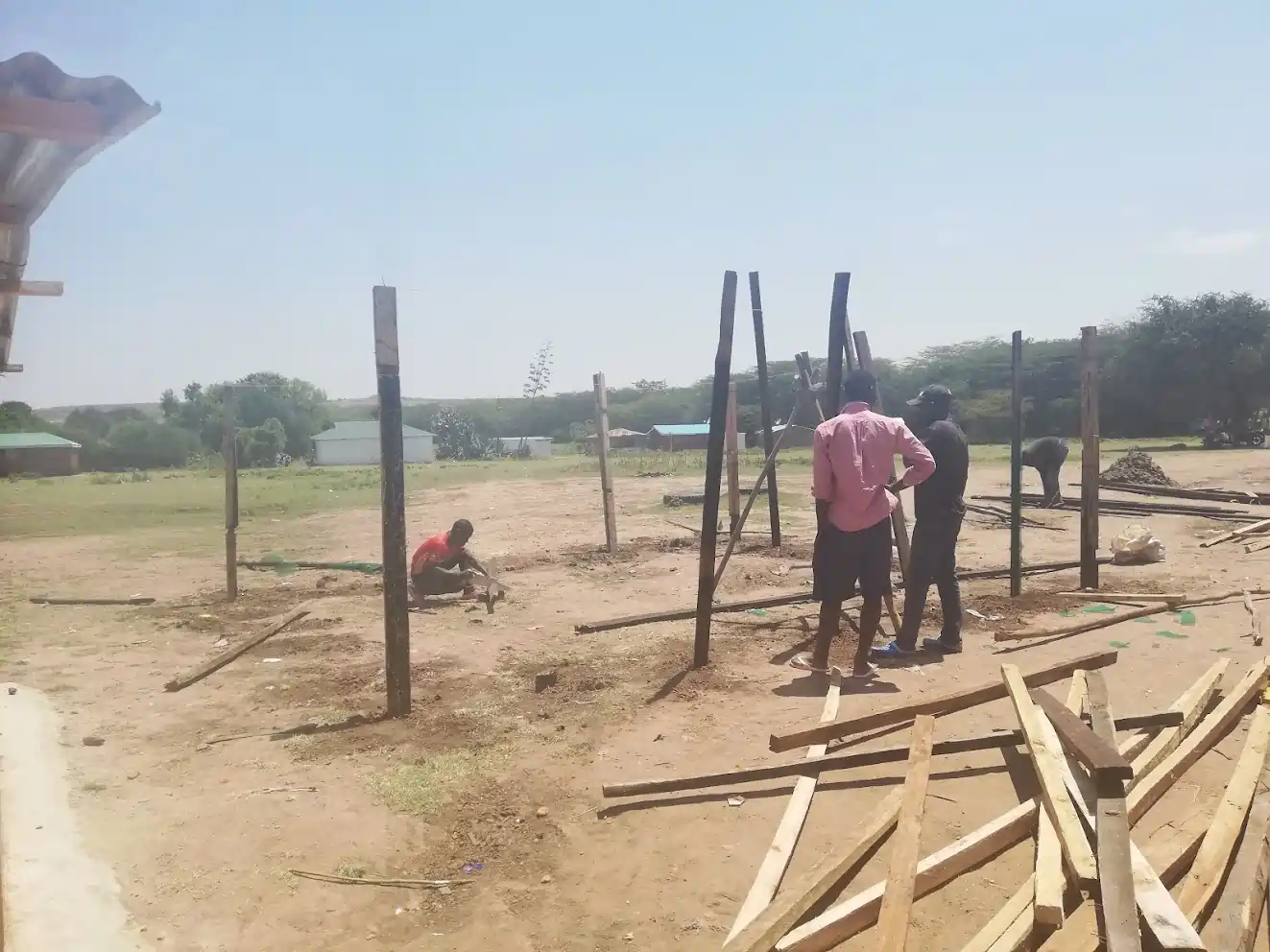
And for a while, we followed through. We set up the agency, built a small café to cater to tourist drivers and tour guides, and I started a modest business reselling Wi-Fi in the local centre. This was an idea that worked almost immediately. Life felt stable. The kind of stability that quietly convinces you that your assumptions were correct.
Then COVID-19 arrived. Tourism dried up almost overnight. The café emptied. The agency stalled. Around the same time, my wife fell seriously ill and returned to Germany for treatment.
We spent the next six months apart as she recovered, and we reconsidered our plans. In the end, joining her was less a decision than a necessity. That is how I found myself on an Emirates flight, leaving behind familiarity and certainty, and beginning the slow process of rebuilding life in a country I had never intended to move to.
Everything Felt Different. Totally Different
From the moment I landed, the difference between what I knew and what I was seeing was impossible to miss. The architecture felt heavier and more deliberate, the streets quieter, the pace restrained. People were wrapped in layers, almost entirely covered, moving with purpose through the cold.
The drive from the airport into the countryside only sharpened the contrast. There was no hooting, no improvised negotiations between cars, no audible urgency. Just orderly traffic, wide snow lined roads, and a silence that felt unfamiliar in its own way.
And it was cold. Not abstract cold. Not “a bit chilly” cold. It was the kind of cold that immediately demands respect. My wife had warned me to wear a warm jacket, which I did. But warmth, I quickly learned, is relative. A warm jacket in Kenya is a vest in the middle of a German winter.
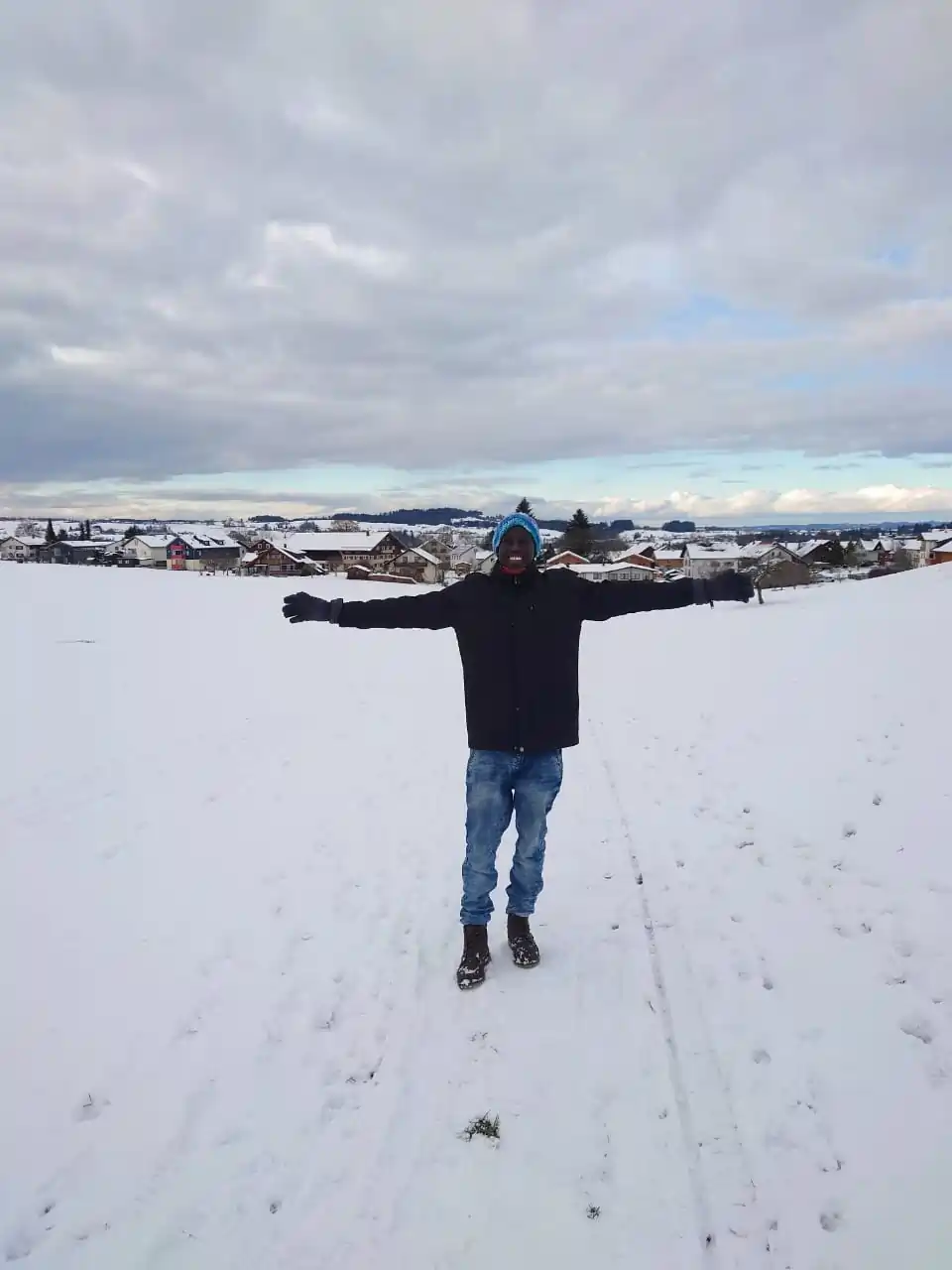
Before I had even unpacked, it was already clear: this was not just a change of place. It was a completely different environment, operating by rules I was yet to understand. The houses stood apart from one another, separated by deliberate distance. There was no sense of shared outdoor life, no casual movement between compounds. Everything felt contained, self-sufficient, and eerily quiet.
What struck me most was the absence of sound. No hens wandering freely. No cocks crowing at will. No background noise reminding you that life was happening just beyond your window, as I had always known it in Kenya. Life had retreated indoors. Plants were kept inside the house, sheltered from the biting winter cold, growing under human care rather than open skies. Even nature, it seemed, needed protection here.
And then there were the meals. Dinner was cold bread and sausages. I was beyond flabbergasted. In Kenya, dinner is always warm. It marks the end of the day, a moment of comfort and gathering. For us Kisiis, dinner almost always meant hot ugali, shared from a common plate, accompanied by greens and a proper stew. Bread was strictly reserved for breakfast, usually with tea. As I went to sleep that first night, I knew I had a lot of adjusting to do, if I had a future in this country.
And Adjust I Did.
I was fortunate not to have to figure everything out alone. With the steady support of my lovely wife Vreni and her family, I was able to find work at the village’s electrical company as an installer barely a month after landing in the country. The role sat comfortably within my engineering background and gave me something I needed early on: structure.
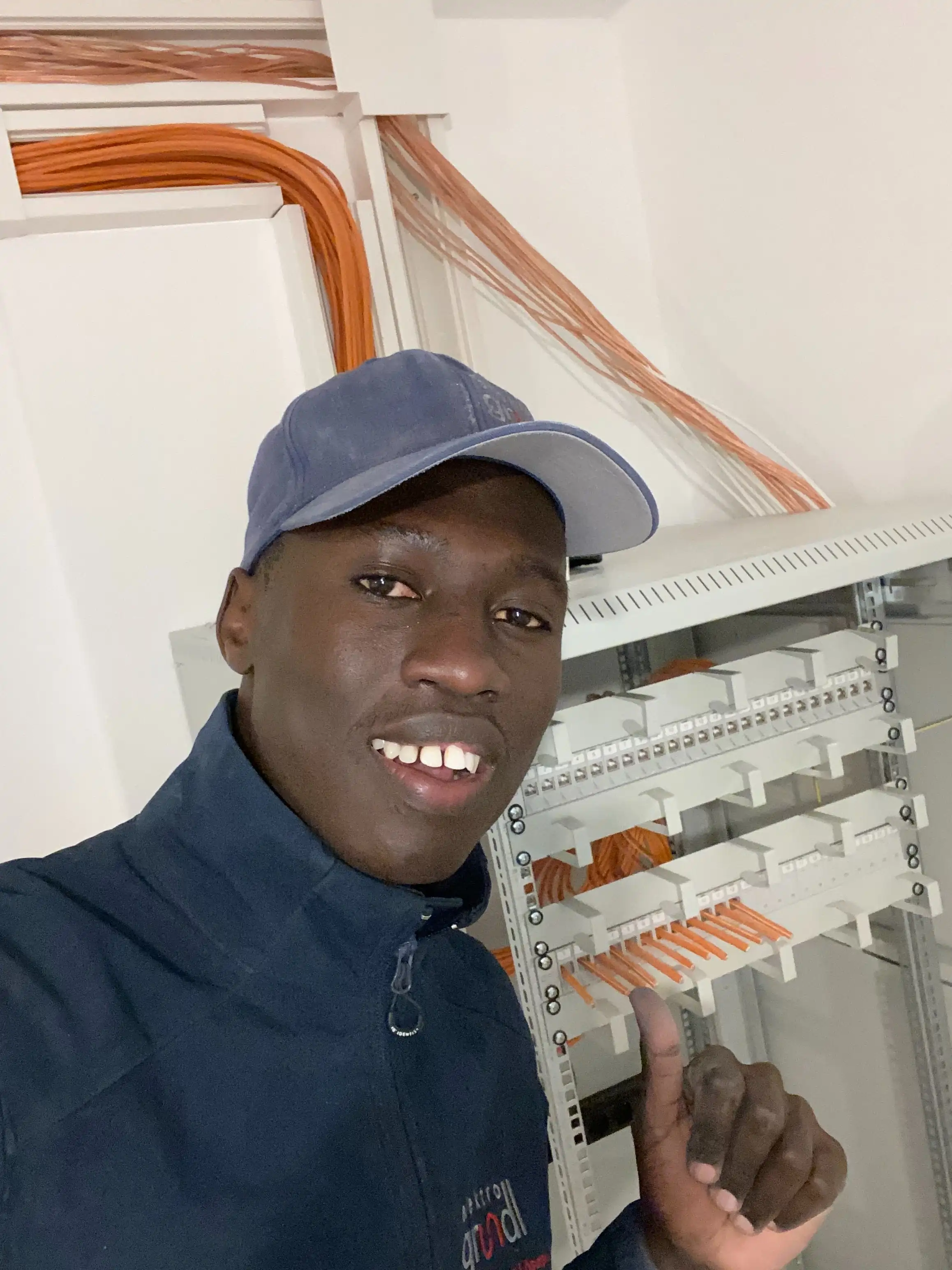
The workplace sharpened my German far faster than any textbook could and offered a practical introduction to the German professional world. From its expectations, its rhythms, and its emphasis on precision and reliability I picked up mannerisms and routines very fast. Despite struggling with the Allgäu dialect at first, the baptism of fire forced me to learn both the local dialect and Hochdeutsch far quicker than I would have otherwise. I like to think I was easy to work with. I showed up, listened, and learned. Settling in, at least professionally, came quicker than I had expected.
As winter slowly gave way to summer, familiarity replaced the initial shock. By then, I had established myself enough to feature for the local football team. It was a small team playing in the local district league but a meaningful milestone for me. I had played football through my college days in Nairobi and felt well at home on the field more than anywhere else.
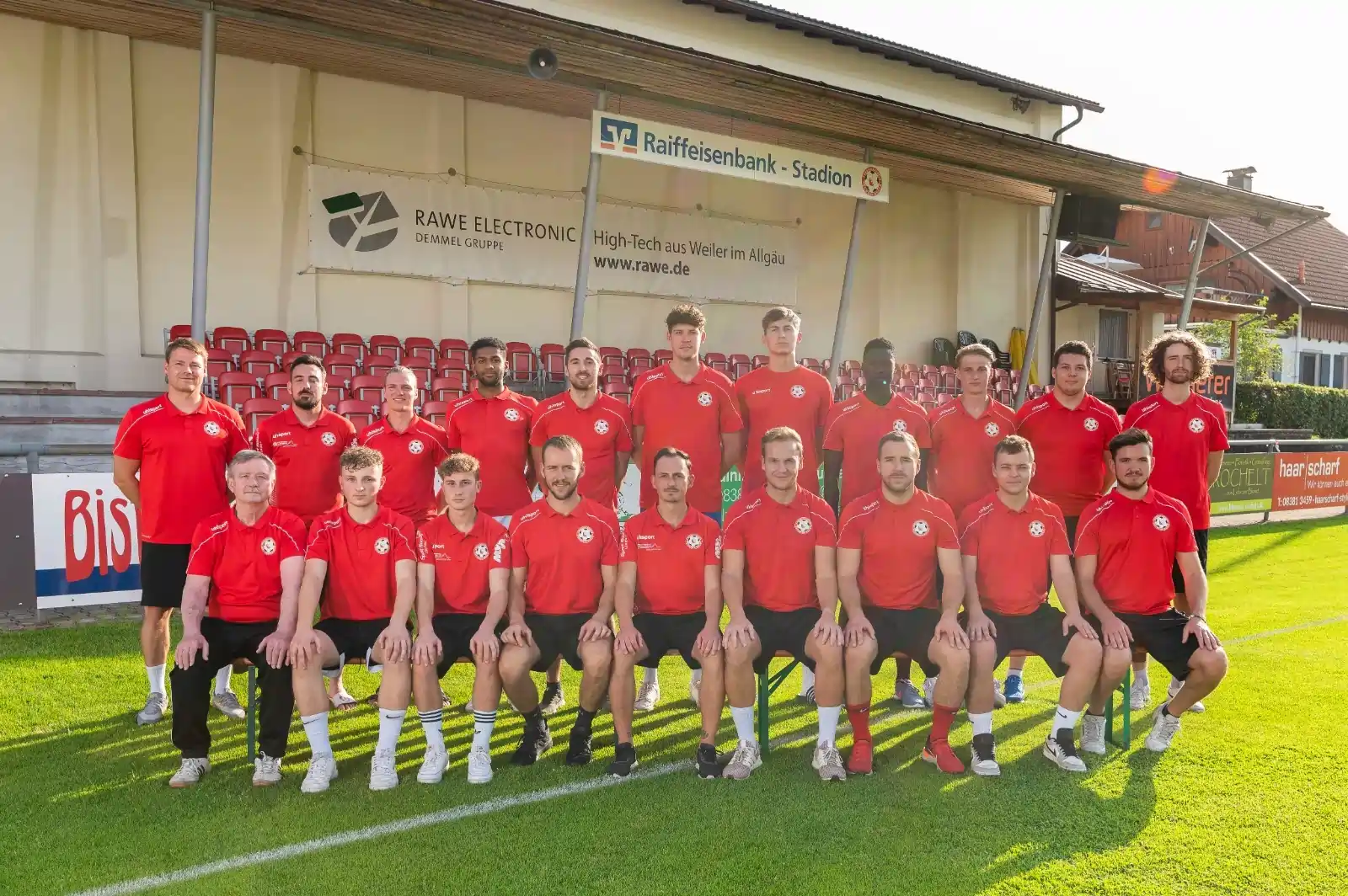
Integration didn’t arrive all at once. It crept in quietly, through routine, shared effort, and the simple act of showing up consistently. Slowly, I was beginning to feel like I had found a home away from Kisii.
The Software Dream
Even as I found stability in the village, a quiet dilemma began to gnaw at me. While I enjoyed the honest, respectable work of electrical installation which suited my engineering background, it wasn’t the future I had envisioned for myself in the long term. I wanted to build with logic and code, not just cables and conduits. I wanted to transition into a software developer role.
The risk was high. I had a family to support and a dreams to chase. To chase a software role meant potentially failing in a highly competitive market where I had no local experience. But I decided that if I was going to reconstruct my life, I wouldn’t stop halfway.
I carved out time with a discipline that felt like a second job. Before committing, I spent weeks researching the technologies used by the companies I aspired to work for. The pattern was clear: across enterprise systems, Java kept appearing as the common denominator.
Every evening, after eight hours of physical labor, I sat down for an hour dedicated solely to learning Java. No exceptions. For six months, while the village slept, I wrestled with syntax, frameworks, and systems architecture. I wasn’t just learning to code, I was deliberately preparing for a specific opportunity in a new professional world.
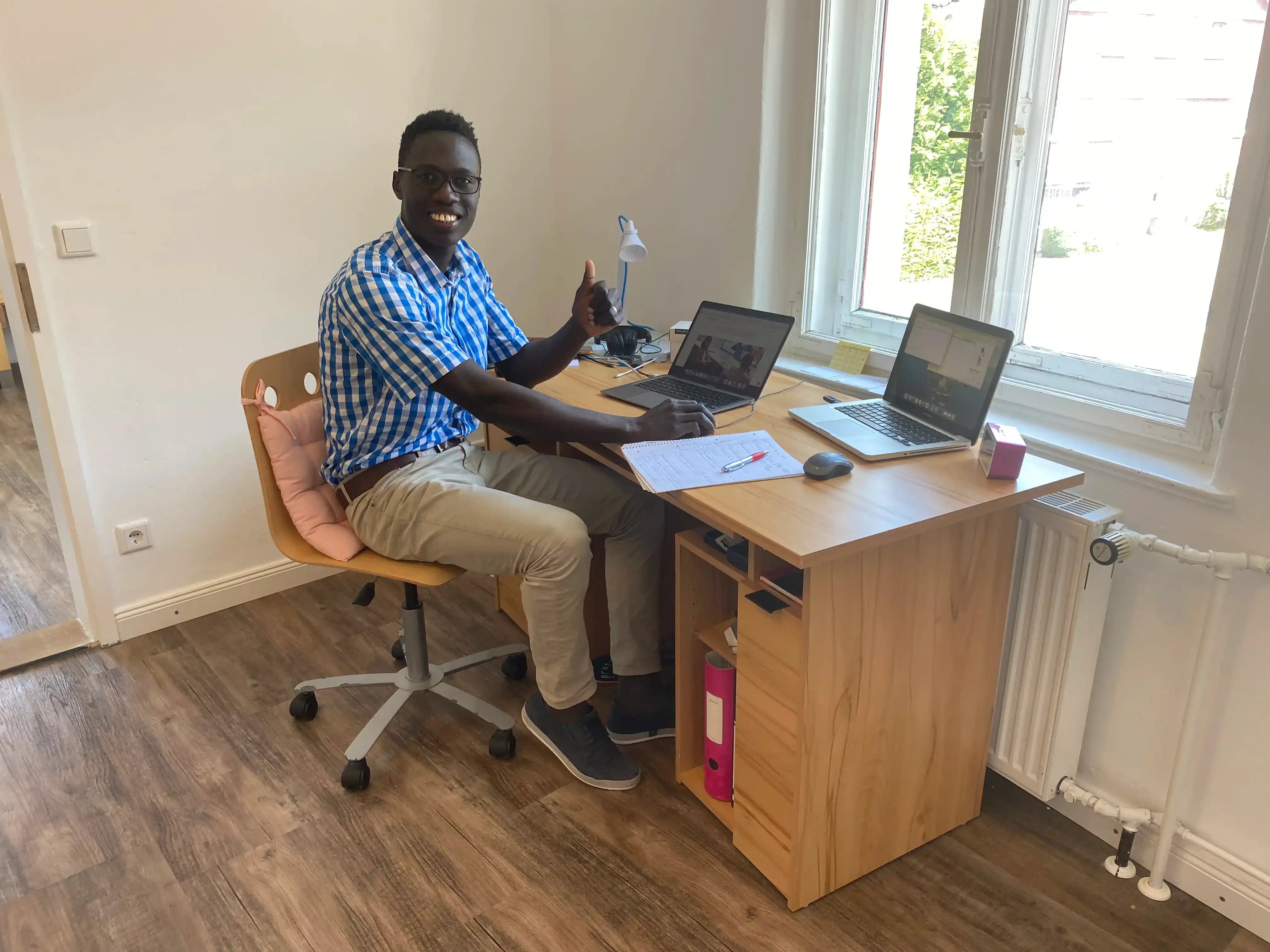
When the interview for a Java Backend Developer role in Munich finally came, I knew I was an unconventional candidate on paper given my lack of experience in the field. But the moment the conversation began, the atmosphere shifted. I didn't just show up with technical competence; I showed up with a level of integration that caught them off guard. And yes, allow me a brief moment to blow my own trumpet!
The recruiters were interested not just in my Java skills, but also in how comfortably I navigated the conversation in German. Having gone through a baptism of fire in the village, I had picked up both the language and its workplace nuances in a way that felt practical rather than academic. Combined with a tech market that was expanding rapidly at the time and willing to take chances on unconventional profiles, it was enough to offset my limited experience on paper.
I landed the role, and just like that, the village chapter closed, and the Munich chapter began.
The Munich Chapter
Munich marked another reset, but a different kind. The quiet of village life gave way to movement, density, and anonymity. Trams replaced country roads. Crowds replaced silence. Life moved faster, and no one stood out for long.
For the first time since arriving in Germany, I was no longer the only Black person in the room. I met people who looked like me, sounded like me, and shared fragments of a familiar cultural shorthand. That alone eased a tension I hadn’t fully realised I had been carrying.
I also found community. It started with a group of Africans working in tech comprised of Nigerians, Ghanaians, Gambians, Namibians, and others from across the continent, spread across different fields but connected by shared experiences. Over time, those connections deepened into something closer to family, and I remain in touch with many of them to this day.
Then came other Kenyans. Shared meals, shared stories, shared laughter. We also go out to party a lot in summer which makes life even more enjoyable in their company. It isn’t the same as home, but it was close enough to remind me that belonging can be rebuilt, even far from where it first formed.
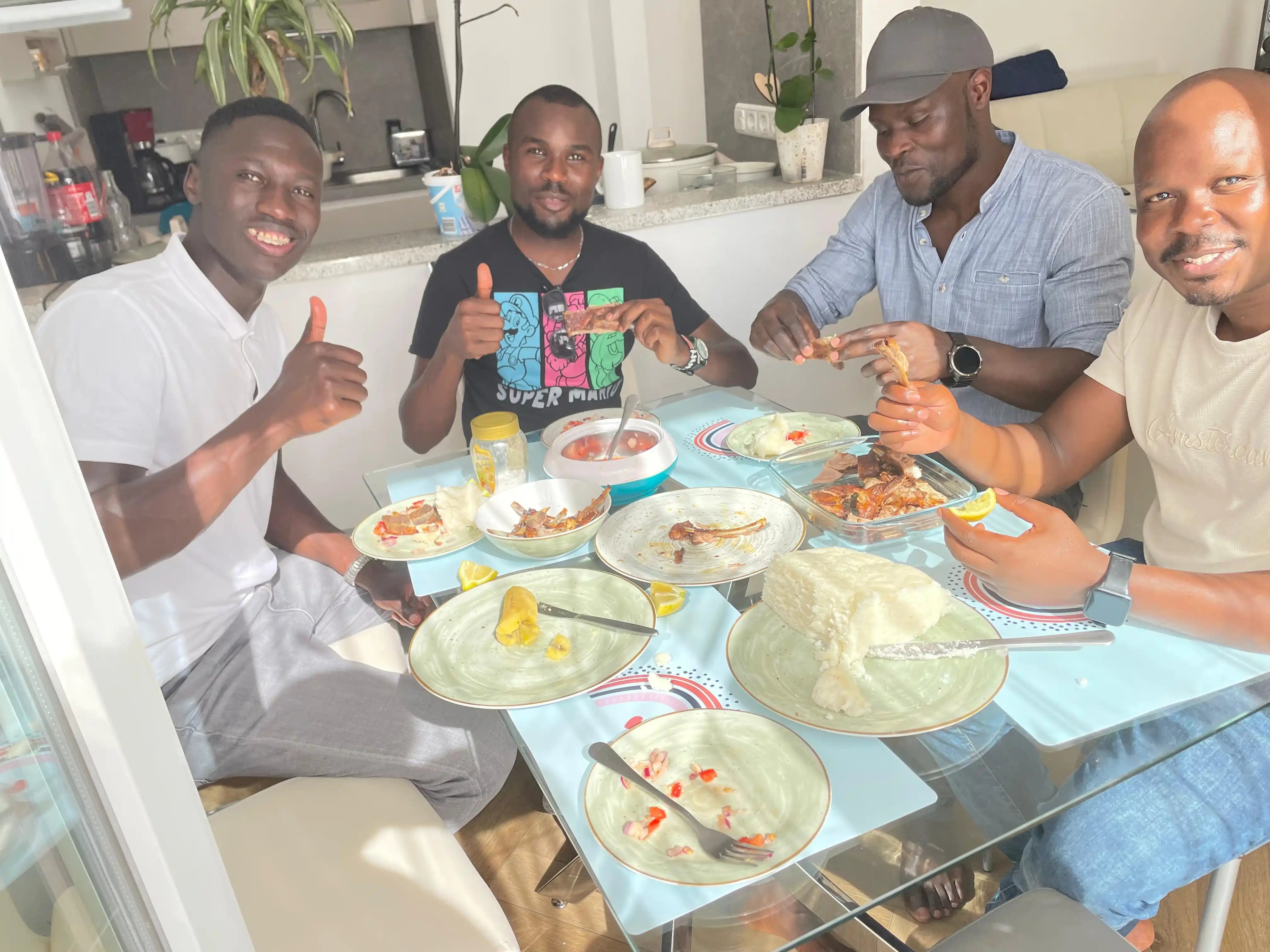
In time, those circles grew smaller and more specific. Today, there is even a small group of Kisiis in Munich comprised of students and professionals who come from the same place as I do. When I look back, this is a detail that still surprises me. It is a quiet reminder of just how much has changed since I landed in Germany.
Family. Redefined
On the family front, things gradually settled into place. Vreni found work in Munich in her field of study as a hotel expert, and after finding a good apartment in a calm corner of the city close to my workplace, we began to put down roots. Not all at once, but deliberately.
In May 2023, our first daughter, Ruby Kemunto, was born. Becoming a father in a foreign land changes your perspective instantly. You stop measuring progress by personal milestones and start thinking in terms of stability, continuity, and responsibility.
Two years later, our second daughter, Verena Moraa , joined us. Watching them grow has been a quiet reminder that life does not pause for uncertainty. It moves forward whether you feel ready or not.
Ruby and Verena are the most tangible bridge between my two worlds. They carry Kisii and Munich effortlessly, without needing to reconcile the two. In them, I see growth not as an abstract idea, but as something lived daily.
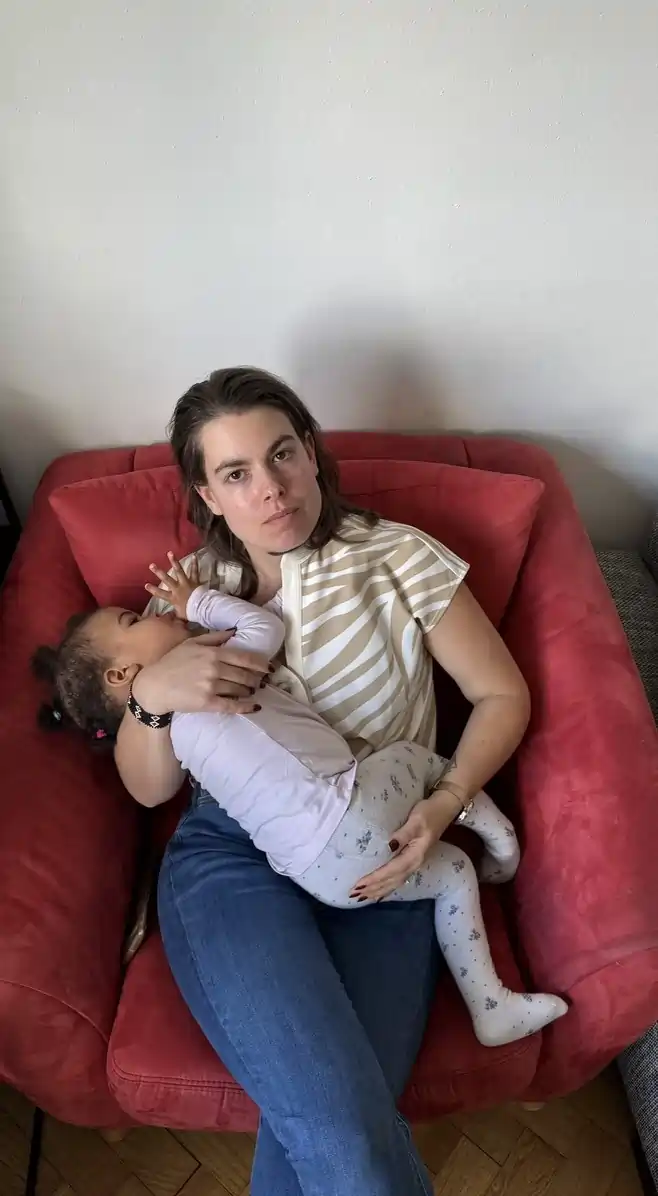
Whether I am dragging them along to the sidelines of my Sunday Kreisliga football matches or sharing stories about where I come from, they have quietly redefined what home means to me. It is no longer a coordinate on a map, it is wherever they are.
The Evolution of the Engineer
My professional rhythm has shifted from mere adaptation to a continuous cycle of growth. Moving into a senior developer role has meant growing alongside the systems I build. While my journey began with Java and Angular, my work has become a never ending classroom. In my current workplace, I have found a positive, high-trust environment where competence is met with genuine autonomy.
I am fortunate to work with experienced colleagues who are generous with their expertise. Their guidance on how systems fail and scale has been vital, but the most significant shift has been the level of responsibility I now carry. There is a quiet, profound weight to managing public facing enterprise systems that handle millions of requests. At this scale, you are trusted to produce software where the cost of a small oversight is high, and reliability is the only acceptable standard.
This culture of trust and high-stakes responsibility has sharpened my focus on performance. It has also fueled a relentless curiosity that recently led me toward Rust. Investing in a systems programming language feels like a full-circle moment for my engineering roots. By mastering memory, concurrency, and failure modes, I am uncovering the mechanics beneath the surface. This deep dive mirrors my last five years in Germany: a process of learning the hidden rules of a new world to build something that lasts.
The Parts That Don’t Make the Highlight Reel
It would be dishonest to suggest that everything settled neatly once I found my footing. Many challenges did not disappear; they simply changed shape.
Professionally, impostor syndrome remains a quiet companion. Because I transitioned into software development later than many of my peers and work in a second language, I occasionally question my place in the rooms I now occupy. While experience builds confidence, that underlying doubt does not vanish overnight.
Socially, ordinary moments can still serve as reminders of my outsider status. Entering a nightclub, for instance, often carries an extra layer of friction. The subtle questions and scrutiny I encounter are rarely dramatic, yet they accumulate over time, creating a weight that others do not have to carry.
Beyond personal interactions, the broader political atmosphere is hard to ignore. The rise of right-leaning politics across Europe has turned immigration into a recurring headline. While this shift does not define my daily life, it certainly shapes the environment in which that life unfolds.
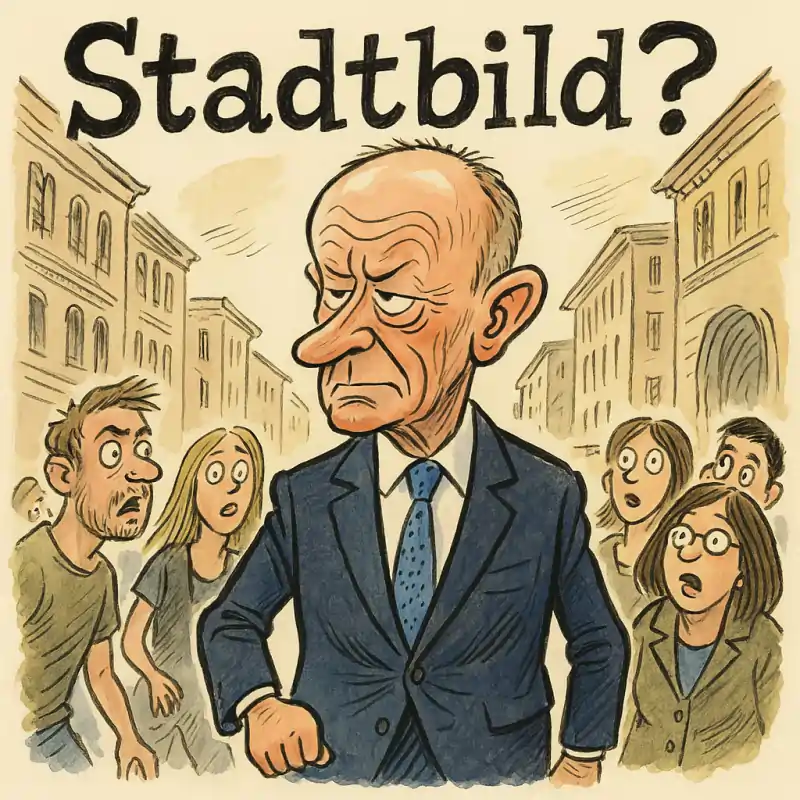
This is further complicated by the current economic climate. Germany is navigating a prolonged slowdown marked by rising costs and lingering uncertainty. Consequently, long-term planning feels less straightforward than it did when I first arrived.
Acknowledging these realities does not make me a victim, nor does it erase what I have built. These are simply the conditions of the environment. They are constraints to be understood and accounted for, much like any other complex system.
Five Years On
In many ways, Germany has given me more than I could have planned for: structure, opportunity, safety, and the space to grow professionally and personally. It has challenged me, but it has also allowed me to build a life that feels grounded.
I don’t pretend to know what the next five years will look like. For now, I’m taking things a day at a time working, learning, raising a family, relearning how to drive a car and staying open to where this path leads next.
Moving to Germany was never part of the plan. It was the result of circumstances colliding. Five years on, the discomfort that once defined the move has softened into perspective. The life I live now does not resemble the one I imagined growing up, but it is no less meaningful. It has been built deliberately through effort, patience, and the quiet acceptance that growth rarely happens without disruption.
A note to anyone just starting out in Germany: You don’t need to have everything figured out. Expect discomfort. Expect moments of doubt. But also know that consistency matters more than confidence. Show up, do the work, and give yourself time. Belonging is built slowly.